
Buying Better: A Case for Slower, Second-Hand Design
Interior design is a genuinely rewarding profession, but it's hard to ignore an uncomfortable truth about the industry: how much it throws away. The construction and interiors sector — everything from fitted joinery to flooring and furnishings — is estimated to generate around 60% of the UK's total waste each year. Much of that is eventually recovered or recycled, but a meaningful share still ends up downcycled or in landfill, and the manufacturing behind new materials carries its own significant carbon cost.
It would be easy to feel overwhelmed by numbers like that. But there's a genuinely useful, practical response available to anyone designing or renovating a home — one that also happens to make for more characterful rooms.
Buy for longevity. The simplest, most impactful choice is to buy well and buy to last. Cheap, mass-produced pieces are tempting on price, or as a stopgap until you can afford something better, but they tend to need replacing within a few years — which usually costs more in the long run, in money and in waste.
Buy second-hand. There's enormous life left in second-hand pieces, if you're willing to look for it — antiques, vintage furniture, reclaimed materials all bring character and history that nothing new quite replicates. Essex is well served here: Battlesbridge, Rettendon, Halstead and Finchingfield are all excellent for finding genuinely unique pieces, whether ready to use as they are or as the starting point for an upcycling project. For anything more structural — cast iron baths, wrought iron railings, reclaimed timber — a yard like Audley Reclamation is worth the visit.
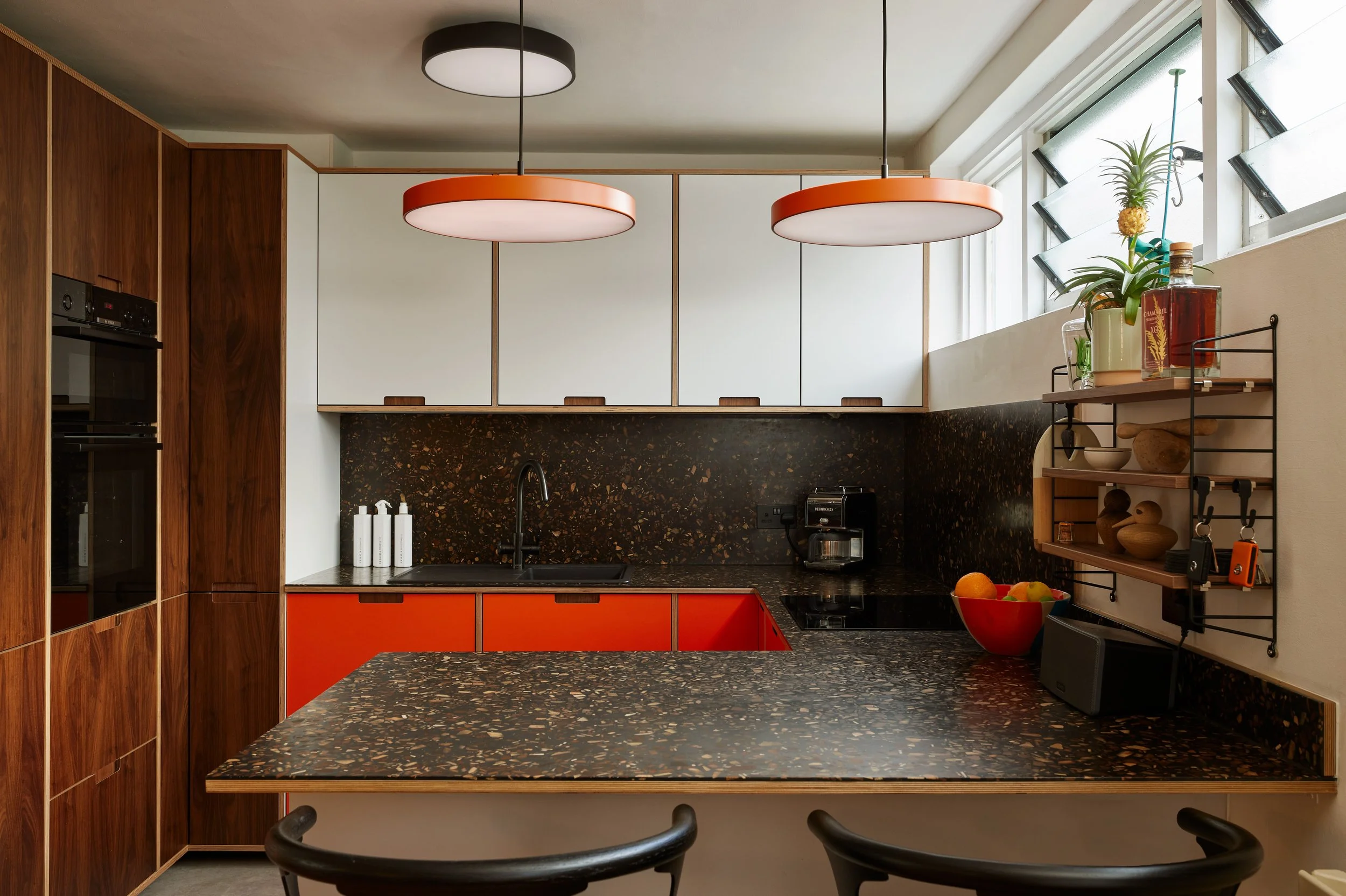
Buy waste, deliberately. Some of the most interesting materials on the market now are made from what would otherwise be discarded. The Curtain Exchange in Coggeshall gives fabric genuine second life; the Haines Collection sells fabric off-cuts that would otherwise go to landfill. And for solid surfaces — worktops, seating, tabletops — companies like Foresso and Smile Plastics are now making genuinely striking materials from waste streams that would once have simply been thrown away.
None of this requires a wholesale change in how you approach a renovation. It just means making a handful of deliberate choices, and — where you can — supporting the people doing this work close to home. It's a value we try to bring to every project at Studio Forty Seven.
This piece originally appeared in Alicia's monthly interior design column for Essex Life, April 2026.
Alicia Mellish leads Studio Forty Seven, an interior design studio working across Essex, Suffolk and Norfolk.